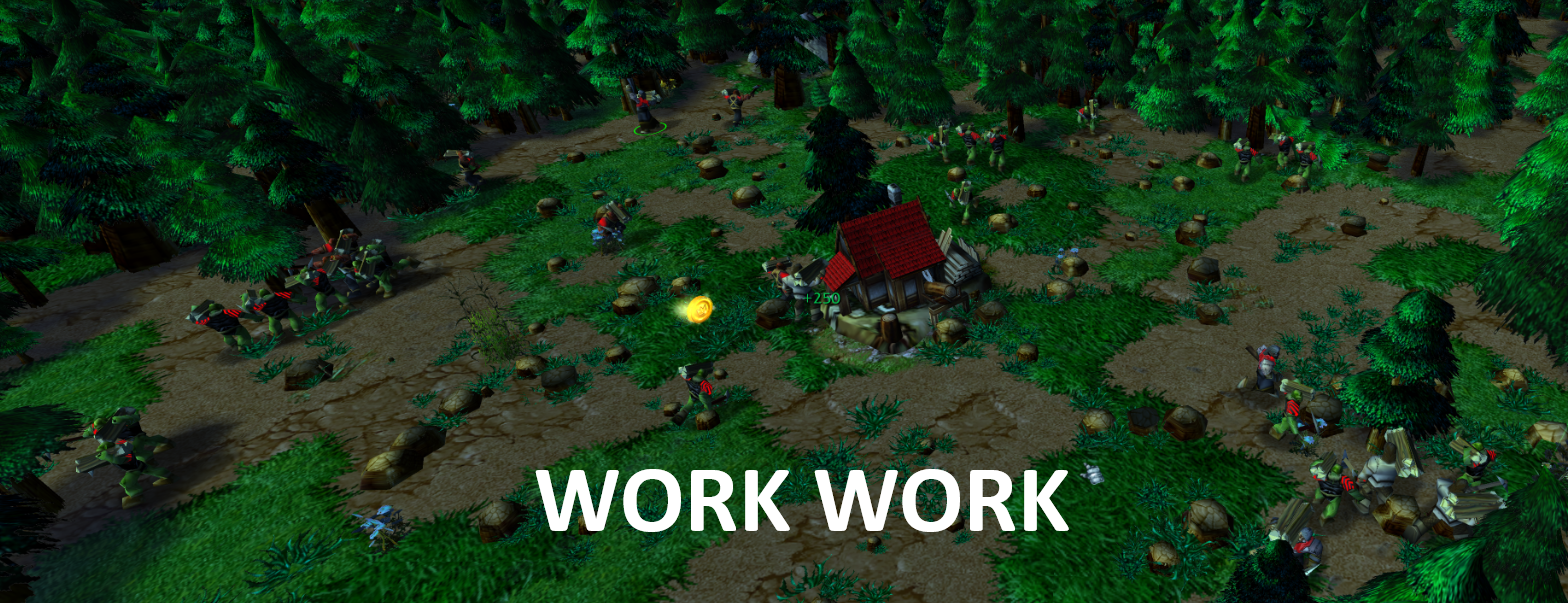
One of the core economic game mechanics of Almanach revolves around the (pretty historical) notion that, at least for a time, most ancient new settlements would basically just exploit whatever resources are available around them; as a matter of fact, the abundance of such resources is often one of the main reasons that lead people to settle there in the first place (or to wander from place to place, like the hunter-gatherers of yore).
Thing is: most uncultivated resources (i.e. stuff that is literally just available for the picking in a natural environment) really can’t sustain very large amounts of people for very long. This is why sedentary societies eventually switch to agriculture or animal husbandry or a mix thereof; it’s just a much more sustainable way of growing food. In parallel, the knowledge and know-hows that these ancient societies ended up developing were directly tied to the resources that were available to them: seaside peoples developed boats for fishing and later for trade, whereas steppe-dwellers built their society around herds and horses. In a way, societies and their respective cultures are very much a product of their surroundings.
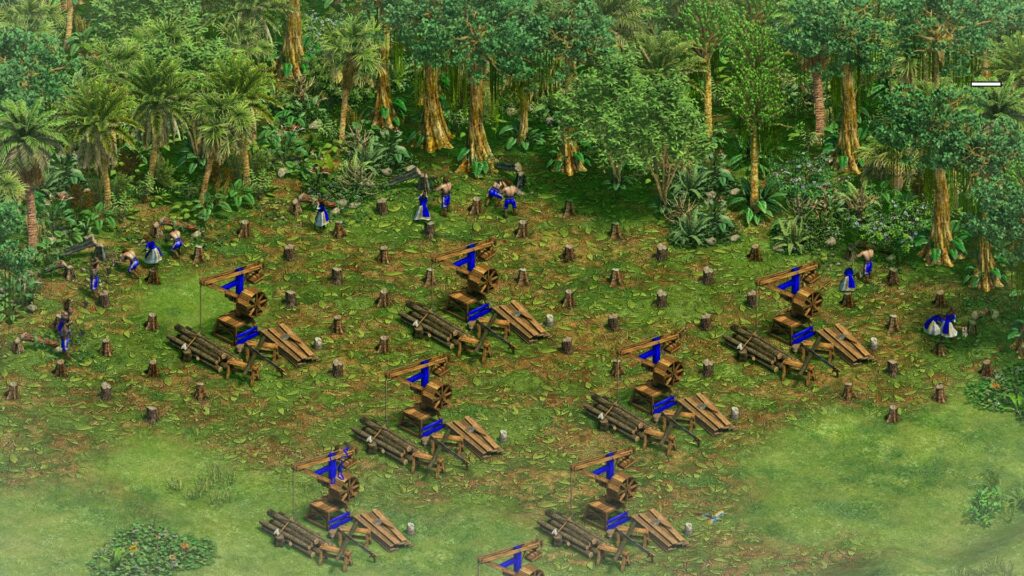
This is basically where we started as an inspiration to design the early parts of the game. We wanted players to experience this tension, when resources are scarce, and stocks are steadily diminishing. We wanted the choice of resources that a player decides to exploit to have an impact on their development. We wanted players to have the option of transitioning to more sustainable resources… or not. This kind of mechanic has already been seen in many RTS and city builder games, but as far as we know, not really in the 4X space (let us know if you know of counter examples!)
In a game where building a powerful fantasy empire is the goal, starting from such a backward state is just a great way to contrast the early and late parts of the game. So we set up to build the first version of this ‘exploit’ system. Basically, you would put down an ‘exploitation’ on a resource somewhere in your city, assign some civilians to it, and they would gradually harvest the resource, granting you the benefits until it exhausted itself:
On the first look, this system is relatively straightforward, and fulfills the main goals (early tension with scarcity, choices impact the development)… but it is too clunky. As it turns out, after playtesting it quite a lot, it just does not really hold up if you ask the simple question: is it fun to interact with? It’s not that bad, honestly, but “not bad” doesn’t really cut it: the reality was that the amount of micromanagement required to efficiently move your population and your exploits around your cities was distracting from the main flow of the game (and that was with only 2-3 cities, nevermind late game empires with 10-20).
On top of that, the system did not really allow for an easy way to deal with naval resources; since you need to place an exploitation inside your city, and that cities are typically on land… how do you deal with resources which are outside the city proper, like fish or narwhals or krakens?
We needed to go back to the drawing board, and come up with a new system that would accomplish the same goals, but with less friction. So we did, and here is what we came up with:
- Instead of placing individual localized exploitations in the city, you now have the option of exploiting any exploitable resource that is contained within your city with civilians, which in turn will deplete the overall stock of the city rather than a specific resource pod.
- You can assign as many civilians to an exploitation as you want… but the resources’ natural regeneration remains the same, so you might deplete the stocks pretty fast if you go berserk on a specific resource. Then again… maybe that’s the goal, you’re the boss after all ;P
- Your exploitation range can be increased to surrounding hexes either by including them in the city or by developing certain technologies (fishing boats for example) or buildings (a hunter’s lodge for example)
- As previously, exploiting resources passively increases your progression towards new technologies in a related field: exploiting cereals will make you better at agriculture; herding hippogryphs might give you access to some cool new flying cavalry units!
We are doing some preliminary testing at this point, and are pretty happy with the result. The system does everything we want it to do, and really helps players focus on the actual development of their Ambitions rather than on micromanaging their cities. This is because the new system allows for semi-stable states: put a few citizens to work on a given exploitation and the resource stocks will remain high through natural regeneration (remind me to tell you guys about the ecology system at some point); put more and they will gradually deplete over the course of a bunch of turns, during which you don’t really need to deal with them and can focus on something else. This also allows for some exciting prospects, like nomadic peoples that move from one resource spot to the next, or vampiric ones that benefit from sucking the world dry…
This will probably become testable to you guys in playtests in the couple coming months, so stay tuned! As usual, if you haven’t done so yet, remember to drop us a wishlist, join our newsletter below to be notified whenever we publish a new article or have some important news to share, or join our discord community for (kinda) weekly updates. See y’all next time!